Tag: readingchallenge

  • Read: Invisible Differences

    With lovely art style and a story told with compassion, Invisible Differences is about a woman in her late 20’s being diagnosed with Asperger’s in a country that doesn’t give it much credence where misinformation is rife. While Marguerite’s story is centred around autism, this is a story that anyone with a form of neuro-divergence can recognise themselves in and find a bit of comfort in seeing Marguerite triumph.

    It is also wonderful as an educational tool to explain what living with ASD (or generally being neuro-atypical, or having a chronic condition) is like in a way that isn’t condescending or light-footed. It’s perfect to evoke an empathy and understanding in others who may not have first hand experience of conditions like this. To those of us who have, Dachez leaves us a heartwarming note at the beginning of the book to remind us we shouldn’t hold ourselves to the standards of others and to live our lives without fear. Something we could all do with being reminded of now and then.

    I see a lot of myself in Marguerite: sensitive to noise, drained by social interactions and the spoon theory as well as some of the negative interactions she goes through before officially receiving her diagnosis. The uplifting outcome is all the better for knowing this is a true story of the author and her artist friend.

    This has been a translation from a French original and I didn’t detect any jilted phrases along the way so excellent in every respect.

    With thanks to NetGalley and the publisher for offering an ARC (Advanced Readers Copy) in exchange for honest reviews.

    Invisible Differences’ English edition is set to be published 18 August 2020 from Oni Press.

    You can also see this review on GoodReads, here: https://www.goodreads.com/review/list/33265375-rai-fg

  • Read: The Hospital

    The Hospital
    Keith C. Blackmore

    Format: Audible
    Cost: Free

    I gave this a go as it was free on Audible and I would say if it ever moves out of that and requires a charge/credit; don’t bother. From the very outset there was wave after wave of awful similes like an ocean of garbage breaking on the shore of your mind. If ever you took an English class on creative writing you will note a couple of things the author has done that your secondary school teachers instructed you to avoid:

    1. untamed similes running rampant that add nothing to the story
      1. Much more likely to jolt you out of the story by how bizarre some of them are: “storm clouds as depressing as suicide”
    2. repeated the same phrase within a short space of time/text
      1. “Back when the world was…” crops up three (3) times in the hour-long audio
    3. unnecessary swearing

    I’m all for swearing, I do it a lot, and there are times when it really adds just the right kick to the story or the dialogue. In this, however, there’s random swearing where it’s not really needed and largely makes no sense, which means when it comes to crunch time at the climax of the story the swearing doesn’t have as much impact.

    The audiobook only lasts one (1) hour, mercifully, and the narrator is almost as painful as the prose. The main ‘shock value’ zombie event is something that, if you’ve ever played Dead Space 2, has been done much better elsewhere.

    1 star because it’s free and short; otherwise, give it a miss.


    See this review in situ on GoodReads here: https://www.goodreads.com/book/show/16123747-the-hospital

  • Reading Challenges 2020

    Here we have my 2020 list of prompts and a few reading-related challenges too. Prompts have been cobbled together from a variety of sources (mostly POPSUGAR, BookRiot and Modern Mrs Darcy) and a couple of my own devising.

    Rai’s Reading Challenge Prompts 2020:

    • A ghost story
    • A story with dragons
    • A book that’s published in 2020
    • A book by a trans or nonbinary author
    • A previous Goodreads Choice award winner
    • A sci-fi/fantasy novella (< 150 pages)
    • A ‘doorstopper’ (> 500 pages) published after 1950, written by a woman
    • A book you picked because the title caught your attention
    • Read a banned book during Banned Books Week
    • A book published in the month of your birthday
    • Read the last book in a series
    • Read a retelling of a classic, fairytale or myth
    • A book gifted to you
    • A book you chose because of the cover art
    • A book outside of your (genre) comfort zone
    • A book with a queer character/s
    • A book with a disabled character
    • A book with a 4 star rating on Goodreads
    • An audiobook
    • A book that has been on your TBR since 2017 or earlier

    Reading-related Challenges:

    • Only buy myself secondhand books
    • When buying a new physical book, ‘destash’ an equal number of books to make space on the shelves
    • Show up to a Book Club at least once

    Goodreads Challenge: 24 books

    6 ‘Must Read’ TBR 2020:

    • The Obelisk Gate (audiobook)
    • The Arkhel Conundrum
    • The Priory of the Orange Tree
    • Reality is not what it seems
    • Daughter of the Empire
    • The Twelve
  • Reading Challenge 2019: wrap-up

    Part way through the year I compiled myself a list of prompts and stipulations as reading challenges. Now that we’re at the end of 2019, it’s time to see how I did!

    Core Challenges: 5 points each

    • A book with ‘cat(s)’ in the title: ‘If Cats Disappeared from the World’
    • Set in space: ‘The Long Way to a Small, Angry Planet’
    • Set in Scandinavia: ‘The Twisted Tree’
    • Published this year (2019): ‘I Know Everything’
    • Published before you were born: ‘The Wasp Factory’
    • A ghost story
    • A story with dragons
    • A non-fiction book: ‘We Should All be Feminists’
    • A comic or graphic novel: ‘Wolverine: Infinity Watch’
    • A translated book: ‘If Cats Disappeared from the World’
    • A book you know nothing about: ‘I Know Everything’
    • A book someone recommended to you personally: ‘The Wasp Factory’
    • Tagged LGBT on Goodreads: ‘They/Them’ & ‘The Long Way to a Small, Angry Planet’
    • A debut novel: ‘The Wasp Factory’
    • A sequel: ‘Head On’
    • …with a two word title: ‘Ghost Wall’
    • An audiobook: ‘Lock In’
    • …from an author from Asia, Africa or Latin America: ‘If Cats Disappeared from the World’
    • A book over 500 pages long: ‘Killing Floor’
    • …that is also (or shortly will be) a movie/TV Series: ‘Sharp Objects’

    TOTAL: 90/100

    Bonus Challenges: 10 points each

    • A multi-author book (translators don’t count): ‘They/Them’
    • …in a genre you don’t normally choose
    • Read more than one translated or International book during the year: ‘If Cats Disappeared from the World’ & ‘We Should all be Feminists’
    • A book you’ve owned for more than 5 years (and haven’t read yet): ‘Play Dead’
    • A “book to read before you die”

    TOTAL: 120/150

    Know Thy Enemy Ultra Challenge: 50 points

    • Read a book by an author you actively dislike

    GRAND TOTAL: 120/200


    The two ‘Core’ challenges that I didn’t get done (ghosts and dragon) I will put into the list of prompts for a 2020 Reading Challenge along with whatever else I can think of or lift from other people’s challenge lists.

    I did have an author in mind for the Ultra Challenge and may try and read them next year.

    Overall I think I will ditch the multi-tiered approach with different point values and go for a much simpler, single list for 2020 as while 90/100 sounds good; 120/200 doesn’t sound as good.

    My Goodreads Reading Challenge target is 24 books and I’m going to pick 5 or 6 titles that I will say I definitely want to tackle in 2020. I plan to do a separate post delving more into the new challenge list and my reading aims for the year as I’ve got a couple of reading-related ideas to explore too. Good luck to everyone else out there with your reading goals for 2020!

  • Read: Sharp Objects

    One thing that you might not glean from the blurb is that some of the content might cause discomfort for some readers. Here’s a big ole CW for you: sex, rape, self-harm, drug and alcohol misuse, child abuse/murder, and teeth.

    Beyond that, this is a fairly standard thriller. Admittedly not told from the perspective of the police, instead from Camille the journalist, but it’s still predictable in terms of the ‘Whodunnit’ part of the plot. The clues Flynn leaves are big and obvious and I found myself wanting to reach in and shake Camille for being so blind to it all on several occasions. Perhaps that is the point? To show how we do not wish to believe the worst in the people we know, no matter how much evidence there is.

    Camille is a walking litany of self-harm (sex, drugs, alcohol, sharp objects…), which I found a little difficult to read at times as she tries to defend her decisions as rational. This is a commonality I found with The Grownup, both protagonists are very sexual and use sex as a way to get what they want (as is one of the key supporting characters in Sharp Objects) however there is no criticism of this and how a society puts women in a position like that has something deeply wrong with it. Because of this, I can’t quite tell if Flynn is trying to be a pro-sex feminist, reclaiming it for women to wield or whether she’s playing into patriarchal rhetoric.

    Given some of the issues I had with the book and the predictable perpetrator I don’t feel I can give this more than 3 stars. Entertaining enough but has it’s problems.

    3/5

    See this review on Goodreads here: https://www.goodreads.com/review/show/3086425953

  • Read: The Twisted Tree

    I picked up The Twisted Tree because it was a) cheap, b) fairly short and c) set in Norway. It sounded interesting and the cover art helped a little too. I was intrigued how the setting would interact with the story and to that point I hadn’t read much set in Scandinavia. I admit points a & b appealed because I felt I was falling behind on my Reading Challenge and needed a bump; nevertheless I ended up enjoying the book more than I expected.

    We follow a young teen, Martha, who has had an accident leaving her blind in one eye and with some facial scarring. Not only that, she has begun to sense things whenever she touches others’ clothes: feelings, memories & intent. Her accident happened at her Grandmother’s cabin in northern Norway, when falling out of a big tree that her Grandmother tends to, and she hasn’t been back since. After writing her Grandmother a host of un-replied letters asking about her new found sense, she travels to the cabin my herself.

    What she finds when she gets to the cabin isn’t what she was hoping for. She meets Stig, a teenage boy who has also run away from home, and together they face some terrible monsters – both real and metaphorical – before Martha has to truly embrace her new ‘condition’ in order to save their lives.

    This is a well-written supernatural tale that anyone with even a passing interest in Norse mythology should pick up. It isn’t quite ‘horror’ and it isn’t quite ‘coming of age’ but the book does have elements of both. It deals with a line of women who have a shared heritage to protect and what might happen if the chain through the generations is broken. It also looks at the repairing of mother-daughter relationships and, in particular, where the child is guiding the adult through a complicated situation.

    The character building by Burge is very good and the story is well-paced and engaging. It is a quick read at 180 pages and still a perfectly formed story that left me wondering where these characters would end up next.

    4/5


    View all my GoodReads reviews

  • Reading Challenges 2019

    In an attempt to jolt myself into reading more consistently and in a hope to hit my overall Goodreads challenge target of 18, I was inspired to throw together a list of mini challenges.  In the same vein as Instagram photo challenges, with 30 days of prompts to take a photo of, these lists are created by lots of bookish sites and accounts and do the rounds every January and I missed out on them.  Below is my challenge list, created in August, to see how well I can do in 4 months.  It’s a bit of a mash up of other reading challenge lists I read through as well as some completely my own.


    Core Challenges: 5 points each

    • A book with ‘cat(s)’ in the title
    • Set in space
    • Set in Scandinavia
    • Published this year (2019)
    • Published before you were born
    • A ghost story
    • A story with dragons
    • A non-fiction book
    • A comic or graphic novel
    • A translated book
    • A book you know nothing about
    • A book someone recommended to you personally
    • Tagged LGBT on Goodreads
    • A debut novel
    • A sequel
    • …with a two word title
    • An audiobook
    • …from an author from Asia, Africa or Latin America
    • A book over 500 pages long
    • …that is also (or shortly will be) a movie/TV Series


    Bonus Challenges: 10 points each

    • A multi-author book (translators don’t count)
    • …in a genre you don’t normally choose
    • Read more than one translated or International book during the year
    • A book you’ve owned for more than 5 years (and haven’t read yet)
    • A “book to read before you die”


    Know Thy Enemy Ultra Challenge: 50 points

    • Read a book by an author you actively dislike

    Usually these challenges don’t involve a points system but I thought it’d add an extra dynamic based on how hard I thought each one would be for me.

    I’ve already ticked some of these off – I think I’ve gathered maybe 50 points so far – and I’m working on another two actively at the moment.  I’ll come back in December/January and post what books went with what challenges.

    Anyone else have any cunning strategies for keeping yourself reading?

  • Read: Ghost Wall

    Read: Ghost Wall

    Ghost WallGhost Wall by Sarah Moss
    My rating: 2 of 5 stars

    The Blurb
    I found the blurb for this book, with hindsight, a little misleading. Similarly it’s classification in ‘Horror’ fiction and whatever algorithm suggested it to me having just finished a ghost story. If you find yourself thinking this is a ghost horror; it’s not. There are no ghosts nor any supernatural goings on. To me, expecting a ghost story I was a little disappointed – more on what’s actually in the book later.

    The Prose
    This is written in what I can only think to describe as continuous prose. There are no speech marks and no new lines for dialogue. There’s internal and vocalised dialogue mixed in together that is hard to differentiate. It is one long train of thought from the narrator, Sylvie, and it does get hard to follow. I was OK dealing with it around 70% of the time and the remainder I found myself puzzling, re-reading and ultimately being jarred out of the flow of the story. This meant I couldn’t fully engage with the story because of both content and style.

    The Story
    *THIS SECTION CONTAINS SPOILERS*

    As I mentioned before, there’s no ghosts. I kept reading in the hope that some would appear once the eponymous Ghost Wall was constructed by the characters. Still, no. Instead the story is one of domestic abuse and violence enacted by Sylvie’s Dad on both her and her mother. The setting of an experiential archaeology field trip is superfluous to the central story of the abuse and the story could have been set anywhere. I found a lot of it an unpleasant read – with a knot in my stomach and a desperate desire to jump into the story and talk some sense into everyone involved. I was frustrated and angry.

    That is the greatest success of this book: that it makes you feel angry and awkward and impotent at the plight of two women being physically and psychologically abused. It is also for this reason I find it a little disrespectful to classify the book as ‘horror’. Not to the author, or the book, but to the real people in real life who have to suffer like Sylvie and her mum. Those situations are horrifying and they are real. I know it’s unlikely the exact events of Ghost Wall have happened in real life but many similar things have – and they are not ‘horror’ fiction.

    Overall
    It is a realistic account of domestic abuse and especially how it can mess with the victim’s mind. If you weren’t expecting that, then be aware this won’t be a pleasant read. The style of the prose is hard to stick with and you may get lost along the way. The story ends just as Sylvie might be getting a chance at something better – and I want to read about that – which was a little frustrating as well. The blurb and classification of the book are a bit off; do a bit more research than I did and read through other people’s reviews – don’t just look at the average rating.

    The combined issues I’ve highlighted, for me, detracted from the overall experience. I would still say it was an important read even if I didn’t like it much in the end. It is certainly not an easy read.

    View all my reviews

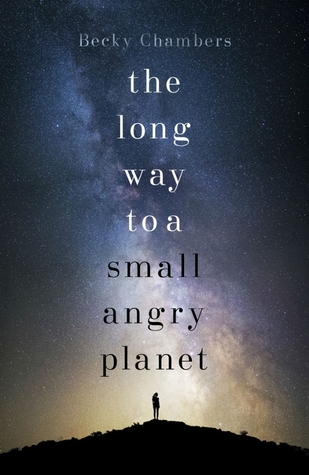
  • Read: The Long Way to a Small, Angry Planet

    Read: The Long Way to a Small, Angry Planet

    Spoiler: it’s not Earth.

    Taken from GoodReads


    The Long Way to a Small, Angry Planet (Wayfarers, #1)The Long Way to a Small, Angry Planet by Becky Chambers
    My rating: 5 of 5 stars

    Surprisingly this came as a recommendation from my mother who is very rarely into SF and she gave me her copy to read after she was done. It took me a while to feel ‘in the mood’ for SF and I eventually picked it up earlier this year (2019) and I absolutely adored it.

    It made me think, it made me tear-up, it made me smile, it made me tense and I love the character-driven nature of it all. This is not your average ‘jump in the spaceship and go to war’ sort of SF and it is all the better for it. This is a story about people and it happens to be in space. Gorgeous, interesting people with actual relationships that I really invested in.

    I found the inclusion of gender-variance and the exploration of self-hood very natural and not shoe-horned at all. The depiction of the different races’ values and customs was well done and highlights where so much other SF is lacking. Chambers seems to have a mind much like my own in realising SF shouldn’t be so human-centric. We shouldn’t assume alien races would even want to know us let alone change their entire culture to accommodate us should we ever reach the stars.

    It doesn’t hurt that the cover art for all three of the series is very tasty and I ordered A Closed and Common Orbit immediately after finishing this one and I cannot wait to get started. Even if you are not a sci-fi person normally (like my mum), this is still well worth your time. It is an enlightening, inspirational and genuine pleasure to read.

    View all my GoodReads reviews